







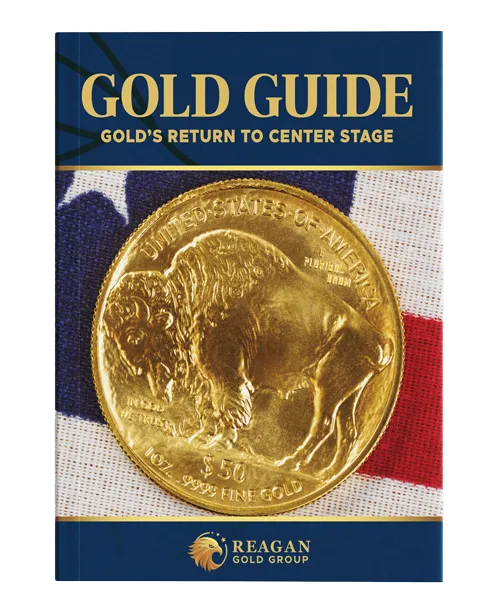
History of Gold and Silver

Gold and silver have played an important role in global economies for thousands of years. From early trade systems to modern financial markets, these metals have remained widely recognized for their durability, scarcity, divisibility, and long-standing use as stores of value.
While modern currencies are no longer backed by gold, precious metals continue to be reviewed by investors, institutions, and central banks as part of broader conversations about purchasing power, financial systems, and long-term planning.
Gold and silver have endured because they are physical, scarce, durable, and broadly recognized. Across different civilizations and financial systems, these metals have been used for trade, currency, savings, reserves, and long-term value storage.
Their historical role is not indicative of future performance, but it helps explain why many investors continue to study precious metals today.

Historical use is not indicative of future results. Gold and silver prices may rise or fall based on market conditions, and precious metals should be evaluated within a broader financial strategy.
Our Customers

Investors who explore gold and silver often share a common goal: building a more diversified and resilient long-term financial strategy. Every client’s situation is different, but many are interested in understanding how physical precious metals may fit alongside traditional assets.
Some clients are nearing retirement, some are already retired, and others are simply evaluating ways to broaden their exposure beyond stocks, bonds, mutual funds, cash, and other paper-based assets.
Many clients who review precious metals are focused on long-term planning, diversification, inflation awareness, retirement security, and understanding how different asset classes may behave during changing market conditions.
Gold and silver may not be suitable for every investor, but they are often reviewed by individuals who want to better understand tangible assets within a broader financial plan.
Precious metals may not be appropriate for every client. Suitability depends on personal goals, risk tolerance, time horizon, liquidity needs, and financial circumstances. Reagan Gold Group provides education but does not provide financial, tax, or legal advice.
Privacy Matters

For many investors, privacy is an important part of long-term financial planning. Gold IRAs offer a structured way to hold eligible physical precious metals within a retirement account while working through established custodians and approved depositories.
A Gold IRA is not anonymous and must follow IRS rules, reporting requirements, custodial procedures, and depository standards. However, some investors review this structure because it may provide a more organized way to hold tangible assets within a retirement account.
Gold IRAs operate through established systems designed to support compliance, recordkeeping, account administration, and asset custody. For some investors, that structure may provide more clarity and control compared with managing multiple financial relationships across different platforms.
Privacy should be evaluated alongside compliance, security, diversification, storage, account rules, and long-term financial goals.
Gold IRAs are not anonymous. They must comply with IRS regulations, reporting requirements, custodial rules, and approved storage requirements. Privacy should be considered as one factor within a broader retirement and precious metals strategy.
Why Gold?

Gold has been used for centuries as a widely recognized asset and store of value. Today, many investors continue to review gold as part of a broader long-term financial strategy, especially during periods of inflation, market volatility, currency uncertainty, and economic change.
Unlike paper-based assets, physical gold is tangible and not tied to the performance of a single company, bank, or issuer. While gold can rise or fall in value, it is often reviewed by investors who want to better understand diversification, purchasing power, and the role physical precious metals may play in a long-term plan.
Gold may be reviewed as part of a broader financial strategy because it behaves differently than many traditional paper assets. Some investors consider gold when evaluating inflation, market cycles, currency weakness, retirement diversification, and exposure to tangible assets.
Gold can rise or fall in value and may perform differently across market conditions, which is why some investors review it as part of broader diversification.
Past performance is not indicative of future results. Gold prices may rise or fall based on market conditions, and gold should be evaluated within a broader, long-term financial plan. Reagan Gold Group does not provide financial, tax, or legal advice.
Gold Education FAQs
Investors may consider gold because it has historically been recognized as a tangible asset and store of value.
Gold is often reviewed during periods of inflation, market volatility, currency uncertainty, and economic change. Some investors also consider gold because it behaves differently than many traditional paper assets.

Gold may support diversification by adding exposure to an asset class that is different from stocks, bonds, mutual funds, cash, and other paper-based holdings.
Diversification can reduce concentration, but losses can still occur. Some investors review gold because it may behave differently under certain market conditions.
Yes. Certain forms of gold can be held in a self-directed IRA when they meet IRS eligibility requirements.
Gold held in an IRA must be purchased, stored, and administered according to applicable IRA rules, custodial requirements, and approved depository arrangements.
Yes. Gold is globally recognized and traded across financial markets.
Its long history, limited supply, physical durability, and broad recognition contribute to its continued role in financial discussions and long-term planning.
Some investors review gold today because of inflation concerns, market volatility, national debt, currency weakness, and the desire to hold a tangible asset.
Gold should be evaluated as one part of a broader financial strategy and not as a replacement for professional financial advice.
Why Gold? Understanding Its Role in Long-Term Financial Planning
Gold has been used for centuries as a widely recognized asset. Today, it continues to be evaluated by investors as part of a diversified financial strategy, particularly during periods of economic change.
Why do investors consider gold?
Economic Uncertainty
Gold has historically behaved differently than traditional financial assets during certain market conditions.
Inflation Awareness
Gold has often moved independently of fiat currencies during inflationary periods, though outcomes can vary.
Portfolio Diversification
Adding gold introduces an alternative asset class alongside stocks and bonds.
Tangible Asset Exposure
Gold is a physical asset not tied to corporate performance or issuer risk.
Can gold be held in an IRA?
Yes. Gold can be held in a self-directed IRA when it meets IRS eligibility requirements.
Is gold widely recognized?
Gold is globally traded and recognized across financial systems, contributing to its long-standing role in markets.
Why do investors consider gold today?
Some investors evaluate gold in response to inflation, market volatility, and broader economic uncertainty, as part of a diversified approach.
Important Consideration
Past performance is not indicative of future results. Gold should be evaluated within a broader, long-term financial plan.
Explore Gold IRA Options
Gold may be reviewed as part of a broader financial strategy because it behaves differently than many traditional paper assets. Some investors consider gold when evaluating inflation, market cycles, currency weakness, retirement diversification, and exposure to tangible assets.
Gold can rise or fall in value and may perform differently across market conditions, which is why some investors review it as part of broader diversification.
Past performance is not indicative of future results. Gold prices may rise or fall based on market conditions, and gold should be evaluated within a broader, long-term financial plan. Reagan Gold Group does not provide financial, tax, or legal advice.
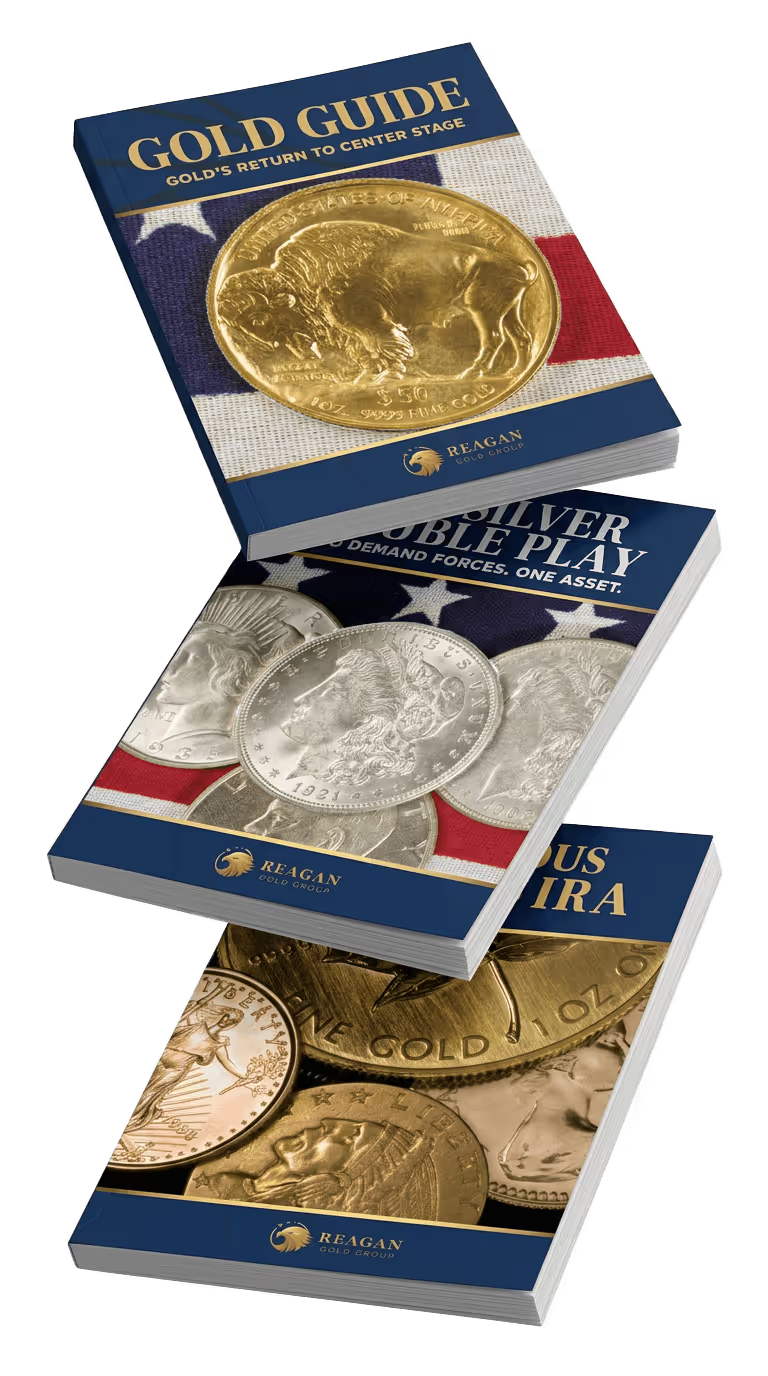


Gallery
Our inventory is constantly changing, but these are our most popular and commonly stocked coins



Open
Sign up for our Newsletter