




The Question Stock Investors Are Avoiding in 2026
After record-breaking years for gold and silver, investors are rethinking their portfolios.
In 2026, why do some investors remain anchored to the stock market after physical gold and silver just posted historic years?
It’s a simple question, but an uncomfortable one.
For many, the answer has less to do with logic and more to do with habit. Stocks are familiar. They are what most people were taught to trust. Retirement plans are built around them. Advisors recommend them by default. And for decades, they worked well enough that few people felt the need to question the structure.
But markets change. Conditions change. And the assumptions that once made stocks feel like the obvious choice deserve another look.
Paper assets come with layers of exposure that often go unexamined. They exist entirely within financial systems. They depend on market liquidity, institutional stability, regulatory frameworks, and counterparties all functioning as expected. When volatility rises or confidence erodes, those dependencies matter.
There is also a psychological component that is rarely acknowledged. Many investors develop a sense of loyalty to their existing strategy or advisor. Changing course can feel like admitting a mistake, even when new information suggests a reassessment is warranted. Familiarity can be comforting, even if it carries risks that no longer align with today’s environment.
By contrast, physical assets like gold and silver operate differently. They are not tied to earnings projections or monetary policy decisions. They do not rely on performance from a third party. Physical metals exist outside the financial system and are owned directly, not represented by a digital entry on a statement.
For some investors, that difference is unsettling at first. It requires thinking about wealth in terms of ownership rather than performance. It shifts the focus from short-term returns to long-term resilience. It also challenges the idea that more complexity automatically means better outcomes.
Gold and silver have historically served a different role than stocks. They are not designed to replace productive assets, but to balance them. They have been used for centuries as stores of value precisely because they are not dependent on financial engineering or institutional confidence. When currencies fluctuate, when markets reprice risk, and when uncertainty rises, tangible assets tend to attract renewed attention.
This does not mean that stocks suddenly have no place. It does mean that relying on a single asset class, especially one embedded entirely in financial systems, carries its own form of concentration risk. Diversification is not just about owning different securities. It is about owning assets that behave differently under stress.
The real question, then, is not why someone should leave stocks entirely. It is whether staying exclusively in paper assets still makes sense in 2026, given today’s economic backdrop. Inflation dynamics, debt levels, monetary policy shifts, and geopolitical uncertainty all contribute to an environment where traditional assumptions deserve scrutiny.
Reevaluating a long-held strategy does not require panic or dramatic moves. It starts with asking better questions. What risks am I exposed to that I may be overlooking? How dependent is my portfolio on systems I do not control? And what role could tangible assets play in strengthening my overall approach?
For many investors, the growing interest in physical gold and silver is not about chasing returns. It is about restoring balance. It is about owning something real in a world that has become increasingly abstract.
Sometimes the most important step is not changing everything at once, but being willing to question why things are the way they are.
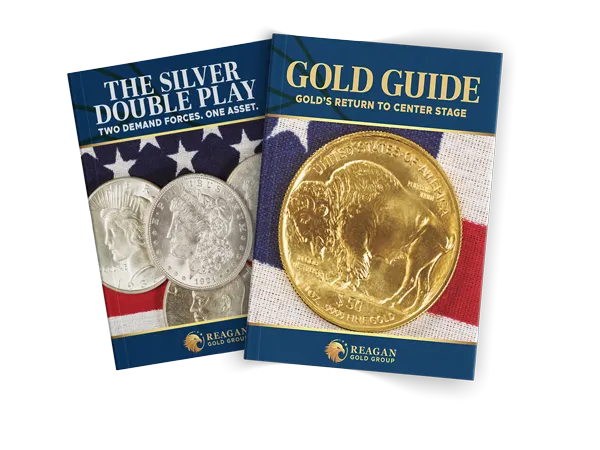
Reagan Gold Group: Precious Metals Guidance You Can Understand
Reagan Gold Group provides education, transparency, and personalized guidance for individuals exploring physical gold and silver. Our team can explain direct ownership and Precious Metals IRA options and help clients understand the factors involved in owning tangible precious metals.
Speak with a Reagan Gold Group specialist to learn more and consider how physical precious metals may fit into a broader diversification strategy based on your individual goals and circumstances.