

As the Dollar Weakens, Gold Becomes America’s Financial Safety Net
Gold is sending a clear message in early 2026. While the U.S. dollar weakens under political pressure and rising fiscal risks, investors are turning to physical precious metals for protection.
Gold is up about 10% since January 1, gaining more than 60% compared with this time last year. That performance reflects a growing loss of confidence in paper currency and a renewed demand for real stores of value.
Across global markets, this shift is often called the “debasement trade.” Some describe it as hedging. Others call it quiet quitting America. Whatever the label, the trend is the same. From Tokyo to New York, currency traders and institutional investors have been reducing dollar exposure and increasing allocations to assets that cannot be printed or diluted.
At the center of the current selloff is President Donald Trump’s second term and its impact on monetary and trade policy. Since returning to office, renewed tariff threats, public pressure on the Federal Reserve to cut interest rates, and increasingly confrontational foreign policy have unsettled global investors. As a result, the Bloomberg Dollar Spot Index has fallen nearly 12% from its recent highs, marking one of its deepest declines since 2022.
Markets are also reacting to what many see as a soft embrace of a weaker currency. A cheaper dollar makes U.S. exports more competitive, but it comes at a cost. It erodes purchasing power, raises import prices, and undermines long-term confidence in the financial system. For investors holding dollar-based assets, that translates into hidden losses over time.
This environment has strengthened gold’s role as monetary insurance. Unlike fiat currency, gold cannot be created by central banks or adjusted by political decree. It exists outside the debt system and carries no counterparty risk. When currencies lose credibility, gold historically becomes the default alternative.
Several analysts have warned that the dollar may be entering a longer-term correction. Padhraic Garvey of ING has said the currency is “moving along the path of least resistance – weaker.” Stephen Jen of Eurizon SLJ Capital has cautioned that a “structural dollar correction” may be underway. At Julius Baer, Carsten Menke has noted that the debasement trade is once again in full swing as investors seek refuge in tangible assets.
Meanwhile, fiscal pressures continue to build. The U.S. government is running massive budget deficits and remains dependent on foreign buyers to finance its debt. Total federal debt now approaches $39 trillion. Any sustained loss of confidence among overseas investors could force higher interest rates and further weaken the currency, creating a dangerous feedback loop.
Even when the dollar experiences short-term rebounds, the broader trend remains fragile. Expectations that the Federal Reserve will resume rate cuts later this year reduce the appeal of holding dollars. Growth is improving overseas. Emerging markets are gaining momentum. And currency hedging against dollar declines has surged to its highest levels in years.
Gold benefits directly from this environment. As the dollar weakens, the purchasing power of cash declines, while hard assets retain value. Over the past year, gold’s more than 60% rise reflects not speculation, but growing concern about monetary stability, government debt, and long-term inflation risk.
Some commentators argue that there is no true replacement for the dollar in global finance. That may be true in the short term. But investors no longer need a replacement to protect themselves. They can simply diversify away from excessive exposure to paper currency and toward assets with a proven history of preserving wealth.
In 2026, that strategy is already paying off. Gold’s steady rise signals that more people are choosing financial independence over financial promises. In a world of expanding deficits, political uncertainty, and currency debasement, physical precious metals remain one of the few forms of money that cannot be manipulated.
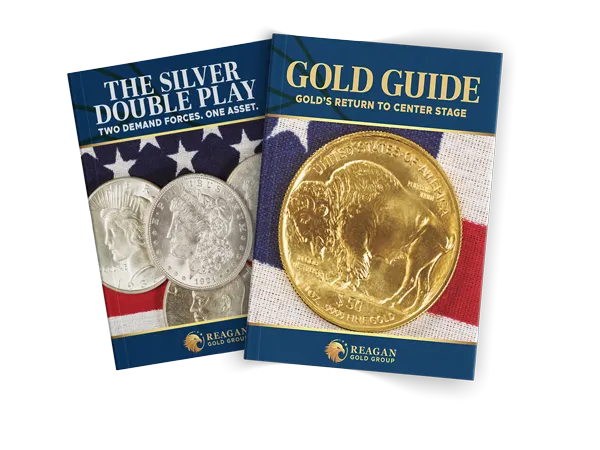
Reagan Gold Group: Precious Metals Guidance You Can Understand
Reagan Gold Group provides education and personalized guidance for individuals exploring physical gold and silver. Our team helps clients understand direct ownership and Precious Metals IRA options while considering how tangible assets may fit into a broader diversification strategy.
If current economic or market developments have you reviewing your approach, speak with a Reagan Gold Group specialist to learn more about physical precious metals and the factors to consider before making a decision.