



Bitcoin’s Latest Plummet Is Forcing Investors to Rethink What “Safe” Really Means
Bitcoin’s volatility is driving investors back to proven safe havens like physical gold and silver
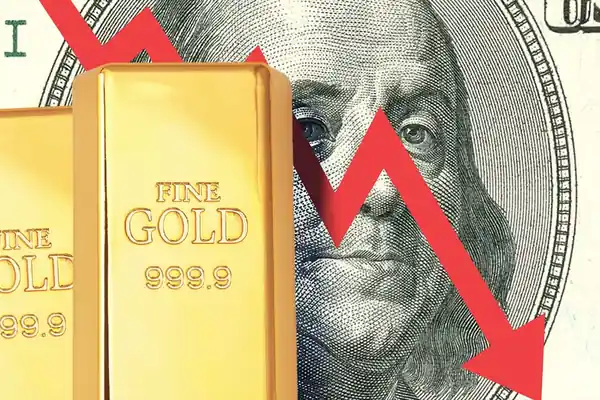
Bitcoin’s recent collapse has accelerated throughout 2026, with prices falling below $70,000 as of February 9, down over 20% since the start of the year. The rout has now erased almost half of its value since the cryptocurrency reached its peak just four months ago.
The sudden reversal is a stark reminder of how quickly speculative, digital assets can unravel—leaving investors exposed to extreme volatility at the worst possible time. In contrast, physical gold continues to demonstrate why it will always be a cornerstone of long-term wealth preservation, offering stability when paper and digital assets fail to deliver.
For years, crypto supporters promised that Bitcoin would replace gold as the world’s new safe haven. It was supposed to protect people from inflation, government debt, and financial instability.
That story sounds good in theory, but in practice, it keeps falling apart.
While Bitcoin continues to decline, gold is up nearly 17% year to date. When markets get nervous, money doesn’t run toward experiments. It runs toward things that have worked before.
"Bitcoin has been exposed as a purely speculative asset, and is not near the debasement trade hedge that gold and other precious metals are," Michael Burry, who rose to prominence after predicting the 2008 financial crisis, wrote in his Substack.
Part of the pressure on Bitcoin came from outside the crypto world. U.S. stocks weakened, artificial intelligence stocks became more volatile and geopolitical tensions increased, causing investors around the country to grow more cautious. In other words, uncertainty returned.
And when uncertainty shows up, Bitcoin doesn’t act like protection—it acts like risk. Instead of absorbing fear, it moves with it.
Some analysts believe the current structure looks similar to past cycles that ended much lower. In 2018, Bitcoin fell more than 80%. In 2021, it dropped nearly 80% again. History doesn’t repeat perfectly, but it does rhyme.
Technical charts are not helping either. Bitcoin remains below key long-term levels and continues to test support. If those levels fail, more downside becomes possible.
On-chain data shows another problem: confidence.
At the 2025 peak, nearly 20 million Bitcoin were held at a profit. Today, that number has dropped sharply. Millions of investors are now heavily underwater—and markets are feeling the hesitation.
Physical gold doesn’t have that problem. Gold and silver are not based on belief, but reality.
You do not need a network to own gold. You do not need an app to access it. You do not need permission to hold it. It grows whether markets are calm or chaotic.
That is why central banks keep buying it and why families choose to pass it down to future generations. It’s also why it keeps showing up during every major crisis.
Silver brings something else to the table: industrial demand. It is used in electronics, solar panels, and advanced technology. That gives it real-world value beyond investment.
Together, gold and silver offer something rare in modern markets: stability.
As financial systems become more complex and debt continues to rise, many investors are starting to value that again. They are tired of watching screens flash red and green. They want something that doesn’t disappear when sentiment changes.
Recent events have made that desire stronger.
Speculative assets can rise quickly. They can also collapse quickly. Physical metals move slower, but they last.
Over time, that difference becomes everything. More investors are learning that lesson. And they are adjusting their portfolios accordingly.
Reagan Gold Group: Precious Metals Guidance You Can Understand
Reagan Gold Group provides education and personalized guidance for individuals exploring physical gold and silver. Our team helps clients understand direct ownership and Precious Metals IRA options while considering how tangible assets may fit into a broader diversification strategy.
If current economic or market developments have you reviewing your approach, speak with a Reagan Gold Group specialist to learn more about physical precious metals and the factors to consider before making a decision.