

Gold and Silver Are Built for What Comes Next
Long-term market forces are pushing gold and silver to the center of portfolios
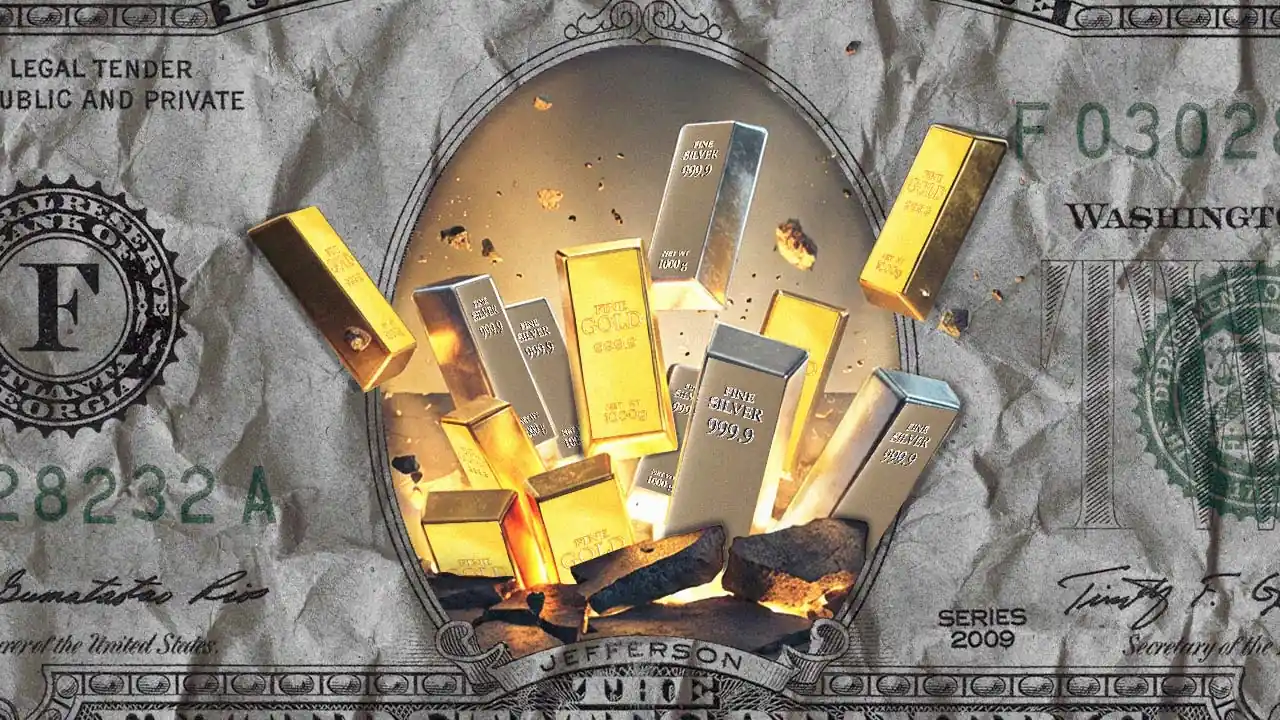
As markets enter 2026, gold and silver are at the center of financial conversations after record-breaking years. Gold prices surged 66% in 2025, the best gain since 1979, while silver jumped a stunning 142%. Both metals are central to how investors, institutions, and central banks are thinking about risk, currency stability, and long-term preservation of value.
The backdrop is defined, in part, by uncertainty. Geopolitical tensions remain elevated, underscored by the recent escalation between the United States and Venezuela, which added fresh strain to already fragile global relationships and energy markets. Central banks are navigating competing pressures. Fiscal discipline has eroded across much of the developed world. Against that backdrop, the risk of a meaningful stock market correction in 2026 is no longer a fringe idea. It is something professional investors are actively preparing for.
Two factors consistently rise to the top of the discussion: a weak U.S. dollar—which posted its worst year since 2017—and lower interest rates.
Historically, those conditions have increased demand for gold. When real yields compress and confidence in fiat currencies weakens, gold’s role as a store of value becomes more prominent. This relationship is not theoretical. It has repeated across cycles for decades.
That view is increasingly supported by market data.
According to Kitco, gold outperformed nearly every major commodity and most other asset classes. The year was marked by sharp pullbacks and rapid recoveries, but each correction ultimately resolved higher. By late December, gold had established a new all-time high near $4,550 per ounce before consolidating into year-end.
The broader takeaway from 2025 was not just price appreciation, but resilience. Gold absorbed political shocks, tariff announcements, and abrupt risk-on rotations, yet demand persisted. That persistence matters heading into 2026.
Retail sentiment remains firmly constructive. In Kitco’s annual survey, a strong majority of Main Street participants expect gold to trade above $5,000 per ounce in 2026, with a meaningful portion seeing prices climb beyond that level. While retail optimism alone is never a sufficient signal, it becomes more relevant when it aligns with institutional positioning.
Major banks have echoed that outlook.
Goldman Sachs has identified gold as its top commodity opportunity for 2026, citing sustained central bank demand as a primary driver. J.P. Morgan, UBS, Wells Fargo, RBC, Bank of America, and Société Générale have all published outlooks that project continued strength in gold through 2026, with most seeing prices anchored well above pre-2024 levels.
Silver enters this outlook from a different angle but with complementary dynamics. While gold’s demand is driven primarily by monetary and reserve considerations, silver benefits from both investment demand and industrial necessity. Energy infrastructure, electronics, AI and advanced manufacturing continue to absorb supply, even as mine output struggles to respond quickly.
For long-term investors, the discussion around 2026 is less about chasing targets and more about positioning. When uncertainty rises, assets tied to real demand and limited supply tend to matter more.
As 2026 approaches, gold and silver are not reacting to a single headline. They are responding to a convergence of structural forces. Understanding those forces is essential for anyone thinking beyond the next quarter and toward long-term preservation.
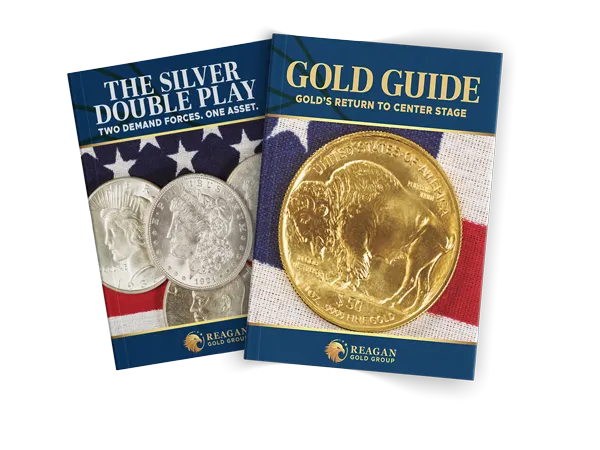
Reagan Gold Group: Precious Metals Guidance You Can Understand
Reagan Gold Group provides education and personalized guidance for individuals exploring physical gold and silver. Our team helps clients understand direct ownership and Precious Metals IRA options while considering how tangible assets may fit into a broader diversification strategy.
If current economic or market developments have you reviewing your approach, speak with a Reagan Gold Group specialist to learn more about physical precious metals and the factors to consider before making a decision.