


Gold Is the World’s Most-Invested Asset
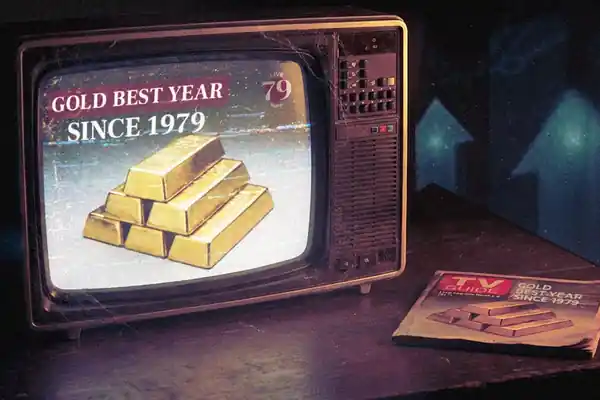
Gold has never needed headlines to prove its value. It has quietly outlasted every currency system, market cycle, and financial experiment built on paper promises. Today, the numbers reflect what disciplined investors have long understood. Gold is the most-invested asset worldwide.
That statement is not marketing language or opinion. It is supported by scale. With a total market value of $31 trillion, gold sits well above every other investable asset. For comparison, Nvidia, one of the most celebrated stocks of the modern market era, carries a valuation of $4.5 trillion. The difference underscores where serious capital is positioned.
When investors allocate at this level, they are not chasing trends. They are choosing durability, liquidity, and permanence.
This shift has not gone unnoticed. Major financial outlets, including Yahoo Finance and Fortune, have increasingly acknowledged gold’s role in modern portfolios. Even banks that once dismissed precious metals are now describing physical gold and silver as sensible assets for today and the years ahead.
Why the renewed focus?
Because gold is doing exactly what it has always done during periods of financial strain. It attracts demand when confidence in paper assets begins to weaken.
Stocks rely on growth assumptions. Bonds rely on trust in governments and currencies. Gold relies on neither. It carries no counterparty risk. No earnings guidance. No balance sheet that can deteriorate overnight. Its value is rooted in scarcity, durability, and global acceptance.
That distinction matters more today than it has in decades.
Inflation remains persistent. Government debt continues to climb. Geopolitical risks are elevated across multiple regions. At the same time, central banks around the world are steadily increasing their gold reserves. These are not speculative buyers. They are institutions tasked with protecting national wealth.
The data tells a clear story. Gold demand is strong and sustained.
Silver is telling a similar story, and in some ways, an even more striking one.
Silver has now climbed to become the fourth-most invested asset, recently surpassing both Microsoft and Google in total investment value. That is a remarkable shift for a metal often overlooked or treated as secondary to gold.
Like gold, silver benefits from physical scarcity and tangible value. Unlike gold, it also carries significant industrial demand. Silver is essential in electronics, renewable energy, medical technology, and manufacturing. This dual role has helped push silver higher in global rankings as demand continues to expand.
Supply, however, has not kept pace. Silver is far rarer in the ground than many investors realize, and mining output has struggled to grow meaningfully. When supply remains constrained and demand rises, upward pressure becomes unavoidable.
When someone claims that investors are not buying gold or silver, the facts say otherwise. Capital flows show sustained interest in both metals. Central banks continue to accumulate gold. Silver continues to climb the ranks of the world’s most invested assets.
None of this suggests abandoning traditional investments entirely. What it does suggest is a broad rebalancing. Investors are increasingly seeking assets that do not depend on flawless execution from corporations, governments, or financial institutions.
Gold and silver offer something fundamentally different. They offer permanence.
In an environment defined by leverage, volatility, and uncertainty, that permanence is exactly what many investors are choosing.
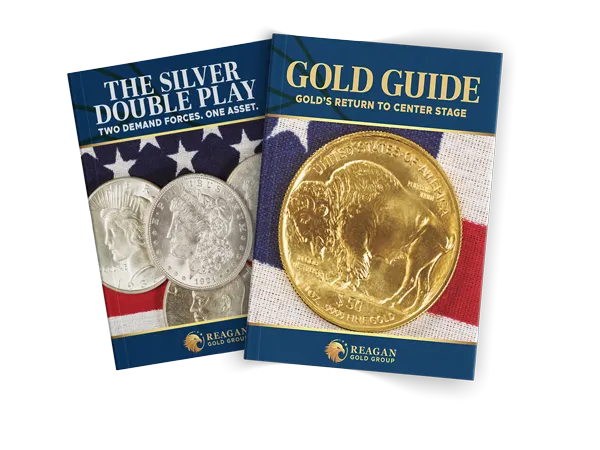
Reagan Gold Group: Precious Metals Guidance You Can Understand
Reagan Gold Group provides education and personalized guidance for individuals exploring physical gold and silver. Our team helps clients understand direct ownership and Precious Metals IRA options while considering how tangible assets may fit into a broader diversification strategy.
If current economic or market developments have you reviewing your approach, speak with a Reagan Gold Group specialist to learn more about physical precious metals and the factors to consider before making a decision.