

The Dollar’s Worst Year Since 2017 Raises New Warning Signs
Gold’s Record 2025 Coincides With the Dollar’s Worst Showing in Almost a Decade
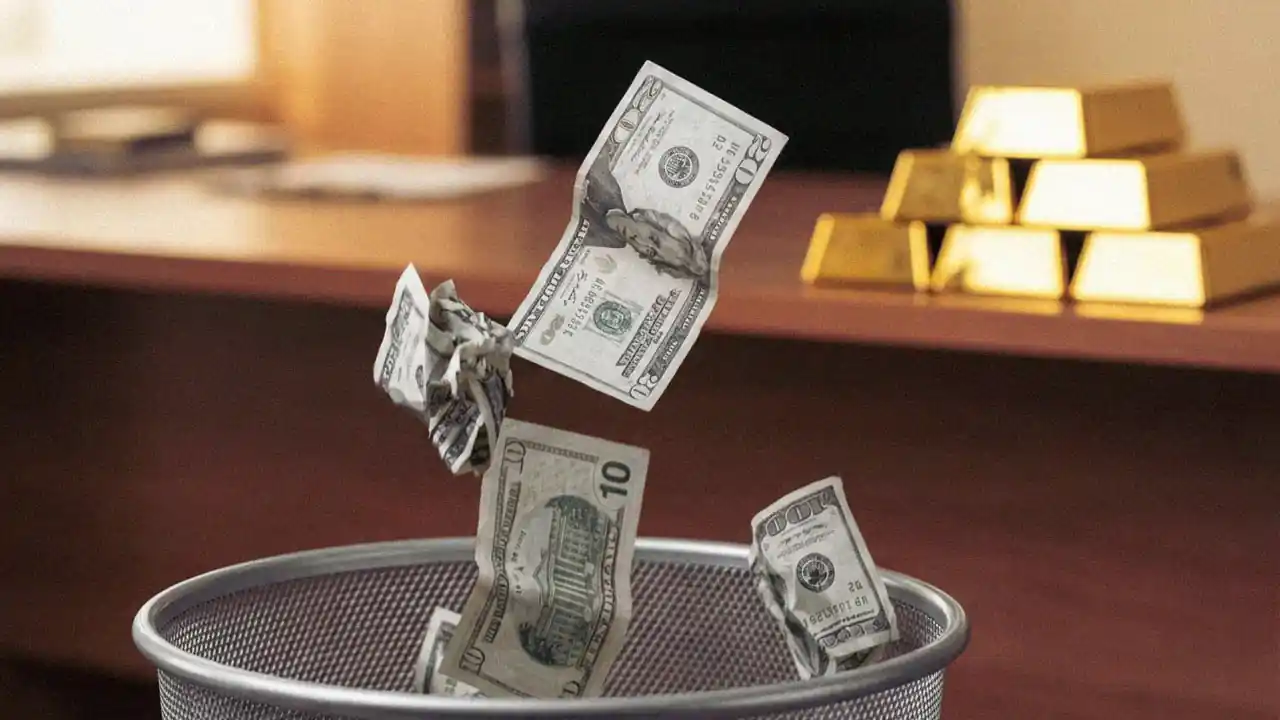
Gold just posted its best year since 1979, rising more than 60% year to date, as investors responded to mounting currency weakness, inflation pressure, and growing uncertainty around U.S. economic policy.
That surge came as the U.S. dollar suffered its worst annual performance since 2017, underscoring why many investors turned to physical assets outside the financial system.
The dollar finished the year down about 8% against a basket of major currencies, according to the Bloomberg Dollar Spot Index. That marked the sharpest annual retreat for the greenback in eight years. Other measures show losses closer to 9% to 10%, following a historic first-half slide that erased nearly a decade of gains from the dollar’s long bull run.
Much of the damage was front-loaded. In the first half of 2025, the dollar suffered its steepest six-month decline in more than half a century. A brief rebound in July faded quickly as concerns about growth, politics, and trade returned.
Trade Policy Shocks the Currency
The dollar’s decline accelerated after President Trump’s April 2 tariff announcement, which rattled global markets and raised fears of lasting damage to U.S. growth.
Invoking emergency powers, the administration imposed a 10% baseline tariff on nearly all imports, with higher “reciprocal” duties targeting countries running trade surpluses with the United States. Markets reacted sharply. The S&P 500 fell more than 13% in less than a week, while the dollar dropped as investors sought safety.
Although the White House paused the harshest tariffs days later, the baseline levy remained in place. Economists warned the policy would raise prices, weaken demand, and invite retaliation. Those concerns lingered throughout the year, weighing on the currency even as stocks recovered.
At the same time, inflation has remained stubborn. Core inflation hovered near 3%, limiting the Federal Reserve’s flexibility just as economic growth slowed. Tariffs added new price pressure, pushing consumer inflation expectations sharply higher through the summer.
Foreign Investors Pull Back
Foreign demand for U.S. assets also weakened.
China cut its holdings of U.S. Treasuries to the lowest level since 2008, while global asset managers increased hedges against dollar weakness. That shift effectively reduced demand for the currency at a time when confidence was already deteriorating.
By late summer, focus turned squarely to the Federal Reserve.
After holding rates steady for months, policymakers began cutting as signs of labor-market weakness mounted. The Fed delivered a quarter-point rate cut in September and another quarter-point cut in December, responding to rising unemployment and slowing payroll growth. The move marked a sharp reversal from the aggressive tightening cycle that had supported the dollar in prior years.
Treasury yields reflected the shift, falling from above 4.5% early in the year to near 4.1% by December, further undercutting the dollar’s yield advantage.
More Cuts on the Horizon
Markets are now pricing in more easing. Futures markets anticipate at least two rate cuts in 2026, with expectations ranging from one to four.
“The biggest factor for the dollar in first quarter will be the Fed,” Yusuke Miyairi, a foreign-exchange strategist at Nomura, told Bloomberg News. “And it’s not just the meetings in January and March, but who will be the Fed Chair after Jerome Powell ends his term.”
Kevin Hassett, director of the National Economic Council, is considered the frontrunner to succeed Powell in May. While viewed as aligned with President Trump’s economic worldview, Hassett has said Trump would “have no weight” in Federal Reserve decisions if he becomes chair.
Why Gold Set Records in 2025
The dollar’s steepest annual decline in nearly a decade highlights deeper concerns about inflation, policy direction, and purchasing power. Against that backdrop, gold’s strongest year since 1979 reflects why many investors continue to view physical gold and silver as long-term stores of value during periods of monetary instability.
Reagan Gold Group: Precious Metals Guidance You Can Understand
Reagan Gold Group provides education and personalized guidance for individuals exploring physical gold and silver. Our team helps clients understand direct ownership and Precious Metals IRA options while considering how tangible assets may fit into a broader diversification strategy.
If current economic or market developments have you reviewing your approach, speak with a Reagan Gold Group specialist to learn more about physical precious metals and the factors to consider before making a decision.