

Energy Shock and Economic Strain Are Strengthening the Case for Gold
War in the Middle East adds pressure to an already fragile economy.
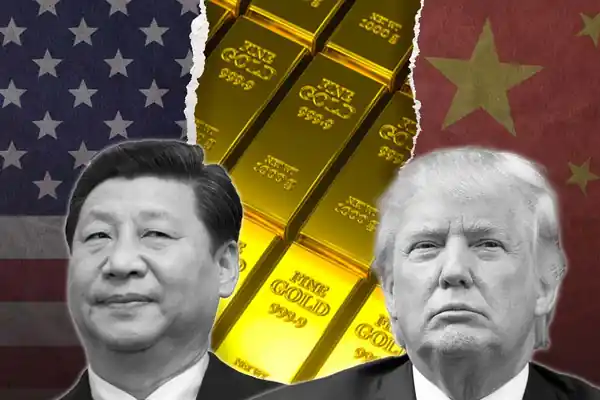
Gold has historically benefited when geopolitical conflicts collide with economic uncertainty. That dynamic is playing out again as the war involving Iran ripples through global markets and raises concerns about rising fuel costs, economic instability, and longer-term inflation pressure.
While investors have been focused on market volatility and shifting economic forecasts, the broader picture is becoming clearer. When global tensions disrupt energy supply and raise the cost of living, gold often emerges as one of the few assets positioned to benefit.
The conflict involving Iran is already beginning to affect the global economy. One of the largest concerns is the disruption of key shipping routes that transport a major share of the world’s energy supplies.
The Strait of Hormuz remains one of the world’s most important energy chokepoints. In 2024 and early 2025, flows through the strait accounted for more than one-quarter of total global seaborne oil trade, about one-fifth of global oil and petroleum-product consumption, and around one-fifth of global liquefied natural gas trade. Since the war began on February 28, 2026, shipping activity through the strait has plunged as shipowners, insurers, and militaries weigh the risks.
As supply chains tighten, consumers are beginning to feel the pressure at home.
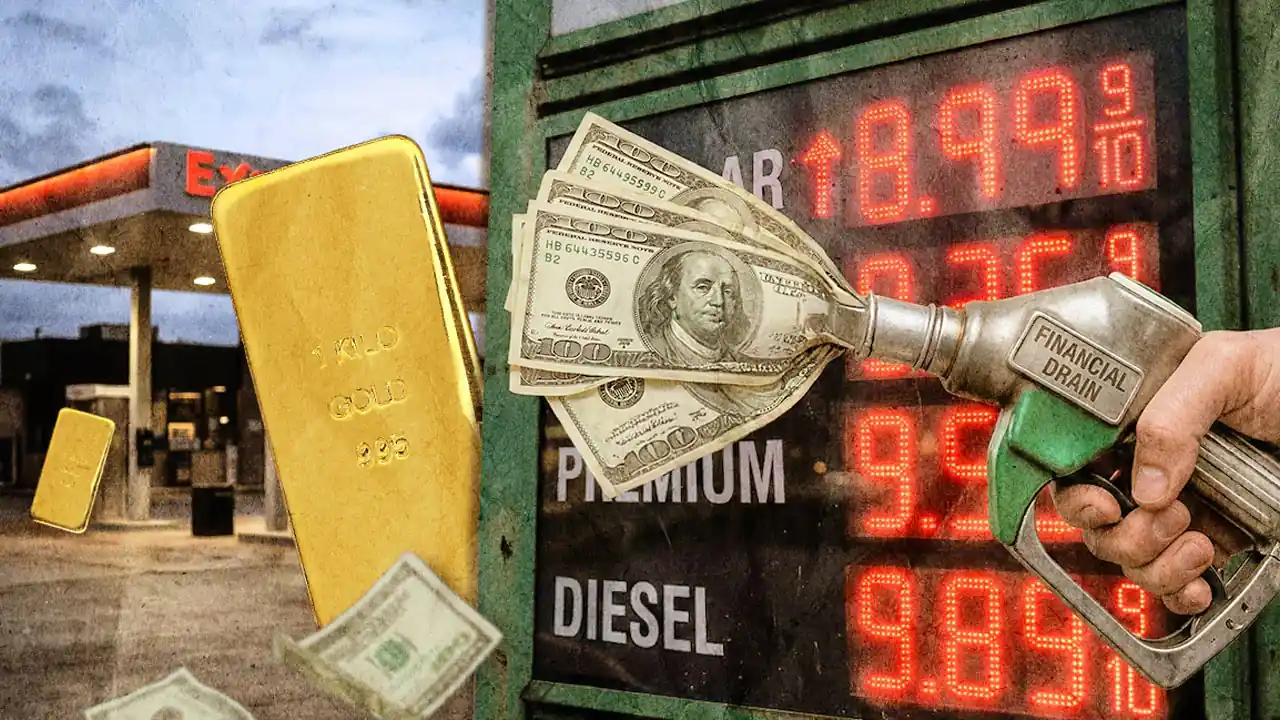
Gasoline prices in the United States have surged above $3.50 per gallon nationally, rising roughly 17% in a matter of days as the conflict disrupted energy markets. Rapid increases in fuel costs tend to ripple through the broader economy because transportation expenses affect nearly every industry, from food production to manufacturing and shipping.
When those costs rise quickly, inflation pressures often follow.
The growing conflict has also raised concerns among economists that the United States could face another economic shock if tensions escalate further. Nobel Prize-winning economist Paul Krugman warned that the war is not happening in isolation and could become “the straw that breaks the camel’s back” for an economy already under stress.
The conflict could ultimately carry a significant financial cost as well. The Trump administration told Congress that munitions used in the first two days alone cost about $5.6 billion, while outside estimates cited by lawmakers have put the ongoing cost at roughly $890 million to $1 billion per day.
At the same time, other economic pressures remain unresolved. Trade uncertainty, government spending concerns, labor-market strain, and technological disruption are all adding to the sense that the global economy is entering a more fragile period.
Periods of economic strain, rising costs, and geopolitical instability have historically created a favorable environment for gold.
Although the metal has recently pulled back from its highs, the broader trend remains strong. Spot gold reached a record $5,594.82 per ounce on January 29, 2026, and was trading around $5,177.50 on March 11 after a normal bout of profit-taking and dollar-related pressure.
Analysts widely view the recent decline as a normal correction following a powerful rally rather than a breakdown in the longer-term trend.
The long-term drivers supporting gold remain intact. Central banks continue buying at historically elevated levels, global investors are still looking for alternatives to traditional financial assets, and geopolitical risks are increasing rather than fading.
In fact, central banks bought 230 tonnes of gold in the fourth quarter of 2025, according to the World Gold Council, bringing full-year official-sector purchases to 863.3 tonnes. While that was below the 1,000-plus-ton levels seen in each of the prior three years, it remained far above the pre-2022 norm and showed that sovereign demand is still providing meaningful support for the market.
When central banks accumulate gold during periods of uncertainty, it often helps create a strong floor beneath prices.
Rapid increases in fuel costs are rarely just about energy markets. They often signal deeper economic stress that can spread across financial markets, consumer spending, and inflation expectations.
For investors, the broader takeaway may be straightforward.
The forces that have been pushing gold higher — geopolitical tension, rising economic uncertainty, and persistent inflation risk — are not disappearing. In several respects, they appear to be intensifying. If the conflict continues and economic pressures build, the environment that has supported gold’s powerful rally could become even stronger.
For investors navigating rising economic uncertainty, physical gold continues to stand apart as a disciplined store of value. Periods of geopolitical tension, higher living costs, and market instability have historically reinforced gold’s role as real, hard money when confidence in traditional financial assets begins to weaken
Reagan Gold Group: Precious Metals Guidance You Can Understand
Reagan Gold Group provides education and personalized guidance for individuals exploring physical gold and silver. Our team helps clients understand direct ownership and Precious Metals IRA options while considering how tangible assets may fit into a broader diversification strategy.
If current economic or market developments have you reviewing your approach, speak with a Reagan Gold Group specialist to learn more about physical precious metals and the factors to consider before making a decision.