




Gold Soars as Supreme Court Tariff Ruling Shakes Trade Policy Outlook
Gold climbs to over $5,200 as tariff and Iran conflict reinforce safe-haven assets
Gold prices climbed more than 2.5% to a three-week high on February 23 after the U.S. Supreme Court ruled that President Donald Trump exceeded his authority in imposing sweeping tariffs. The decision sent the dollar lower and injected fresh uncertainty into U.S. trade policy, lifting demand for safe-haven assets.
The Supreme Court found last week that the administration’s “Liberation Day” tariffs exceeded presidential authority under the International Emergency Economic Powers Act. The ruling determined that the law did not provide grounds for imposing broad import taxes on major trading partners.
The immediate market reaction was swift. President Trump responded on February 21 by announcing a new global tariff rate of 15%, up from 10% the day before. The White House said the measure is intended to replace the invalidated tariffs and preserve trade leverage. Under existing law, the 15% tariff can last up to 150 days in cases involving fundamental international payments problems.
“Investors strap back in for another wave of tariff uncertainty,” said Matt Britzman, equity analyst at Hargreaves Lansdown.
Independent analyst Ross Norman said gold and silver have likely been supported by confusion over the tariff outlook, along with weak economic growth data. “After surging to unprecedented heights earlier this year, gold is showing signs of reclaiming its long-term bull market but in a more measured way,” Norman said.
The Supreme Court decision also casts doubt on trade agreements negotiated with key partners. Reports indicate that the European Union is freezing ratification of a trade agreement with Washington pending clarity, Indian officials are postponing travel to the U.S., and a member of Japan’s ruling party described the situation as “a real mess.”
Beyond trade policy, markets are balancing mixed economic signals. Data released last week showed that underlying U.S. inflation increased more than expected in December, with indications of further acceleration in January. Stronger inflation could discourage the Federal Reserve from cutting interest rates in the near term, reducing some of the appeal of non-yielding gold. Investors are watching comments from Federal Reserve officials this week for additional policy signals.
Still, structural factors remain supportive. Gold has now posted three consecutive weekly gains as geopolitical tensions and concerns over sovereign debt and currency stability continue to influence investor behavior. Commodity Futures Trading Commission data shows net-long gold futures positions have fallen to their lowest level in nearly a year, suggesting room for additional positioning.
Global tensions are also in focus. Markets are monitoring U.S.–Iran negotiations over Tehran’s nuclear program, alongside a significant U.S. military presence in the region. Heightened geopolitical risk has helped maintain a premium in precious metals prices.
Silver followed gold higher, climbing to over $86 per ounce, its strongest level in more than two weeks.
As trade policy uncertainty deepens and legal challenges reshape tariff authority, gold’s move above $5,100 reflects a familiar dynamic. When confidence in currency stability and global trade frameworks weakens, investors often turn to tangible assets to preserve purchasing power.
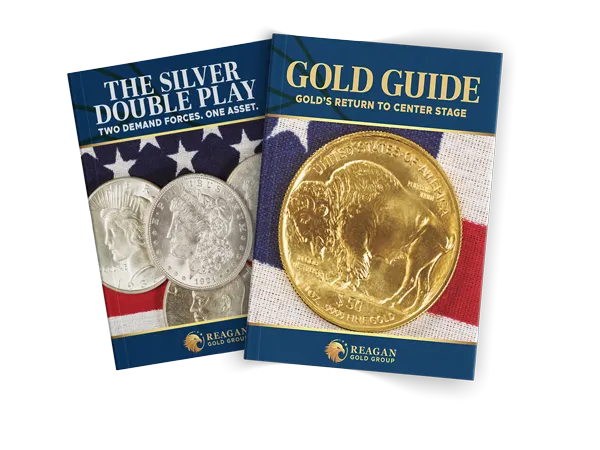
Reagan Gold Group: Precious Metals Guidance You Can Understand
Reagan Gold Group provides education and personalized guidance for individuals exploring physical gold and silver. Our team helps clients understand direct ownership and Precious Metals IRA options while considering how tangible assets may fit into a broader diversification strategy.
If current economic or market developments have you reviewing your approach, speak with a Reagan Gold Group specialist to learn more about physical precious metals and the factors to consider before making a decision.